Buy tokens
Buy tokens


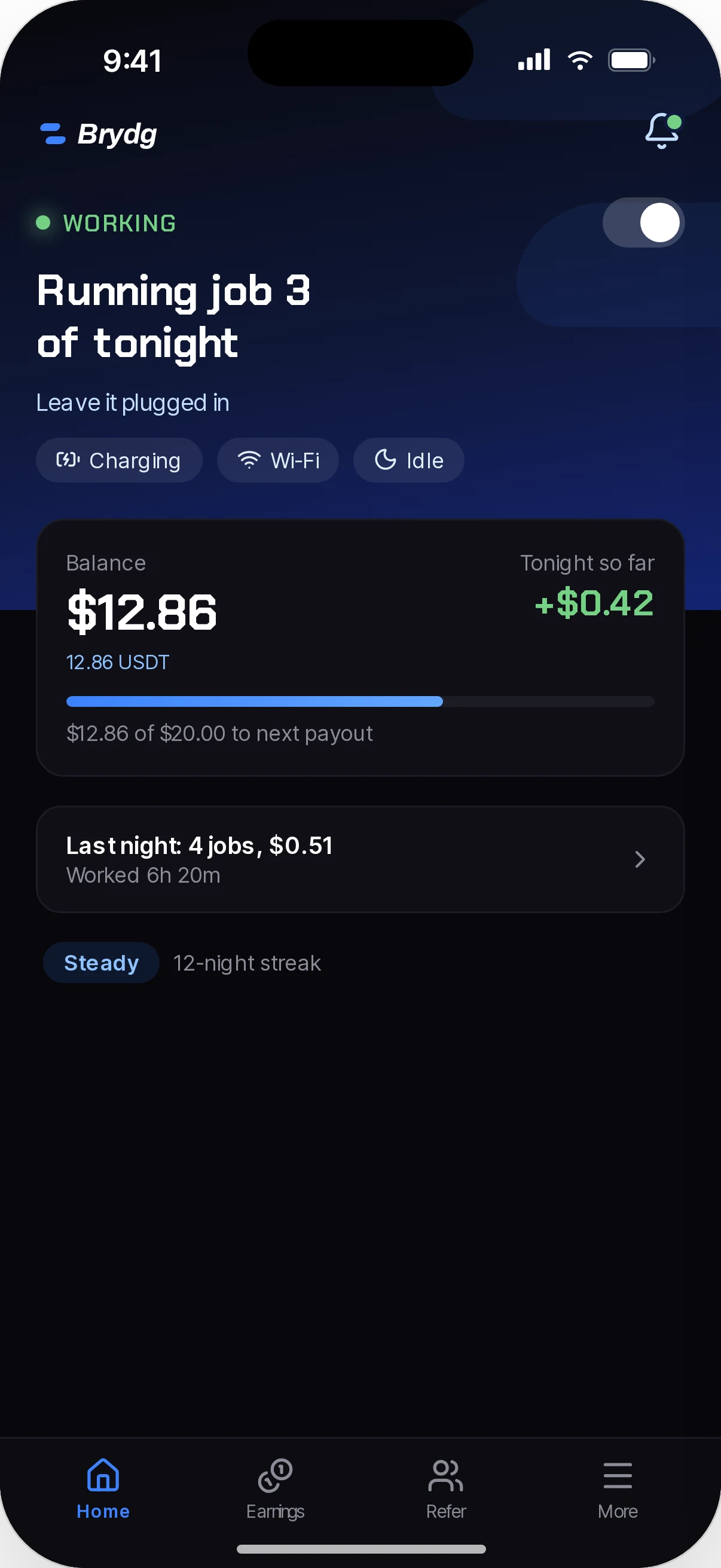
Every phone on the network arrives through this app: attested as a real device, benchmarked once, working only while it charges and connected, paid per verified unit into rails people already use. It is where the cost of buying supply is decided. Public release June 2027, Africa first, one month before TGE.
Demo · figures are made up. Screens are the app as designed; no device is enrolled and no provider has been paid.
The holder pool is 15% of gross revenue. Gross revenue is Brydg's markup on what providers are paid: 30%, or 35% on telco-bundled cohorts. That markup exists only if phones can be recruited, verified, paid and kept for less than their work is worth. Comparable networks in these markets failed on exactly those four costs. The four sections below take them in turn, with the screen that removes each.
Structural split from the Business Plan, not a forecast. The exact telco share within the cap is a decision pending and is disclosed when a partnership is executed. No buyer or telco contract is signed at the date of this page.
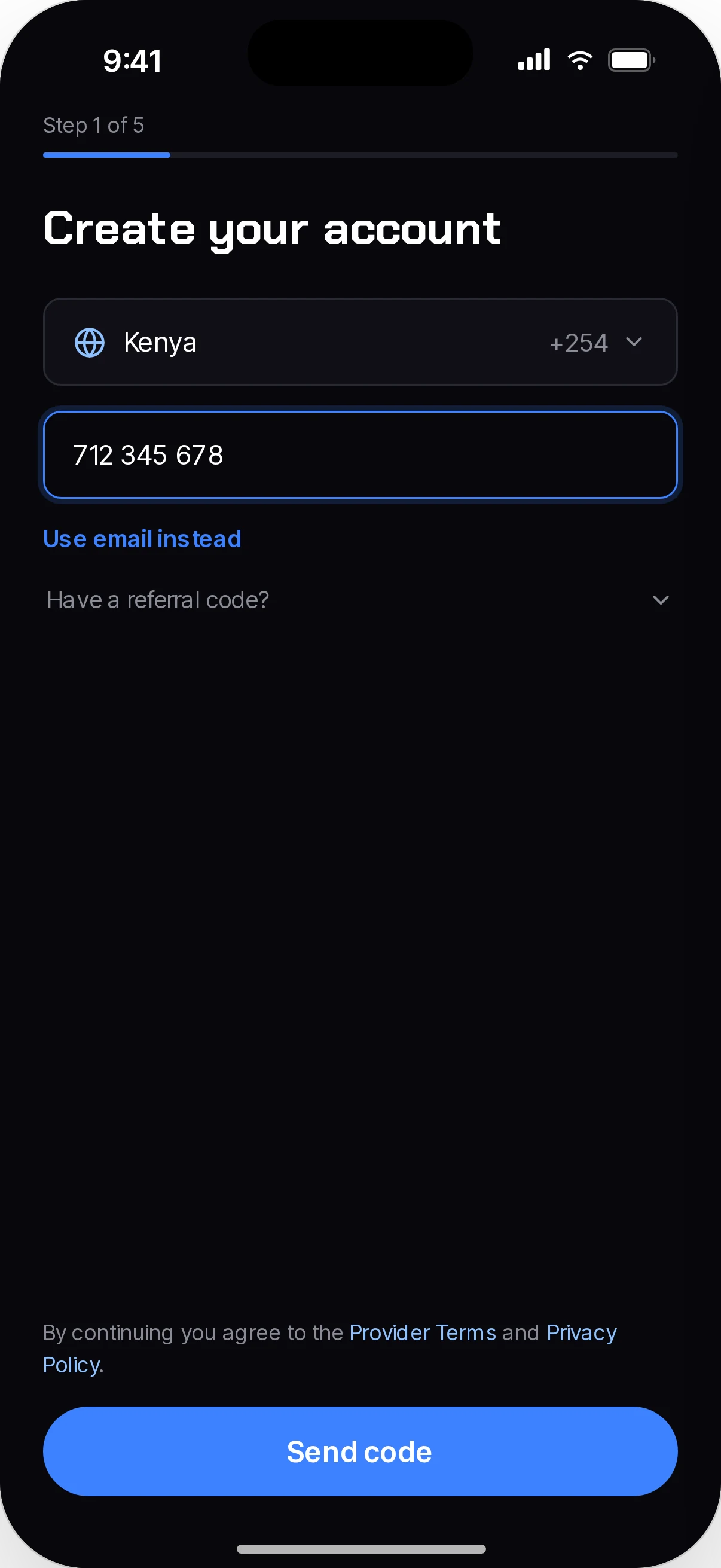
SIM registration in the target corridors already ties a number to a person, so the base tier needs no document, no review and no cost. A referral code is captured on the same screen, which is how a recruited phone is attributed to the person who recruited it. The referral bonus is released only once the invited phone is verified and has stayed active for a set period; fake and self-referred accounts lose every bonus. Where a telco bundles participation into a plan, the app ships pre-installed, opting in is part of activation, and the telco's identity records satisfy the base tier: acquisition at partner scale instead of per-user cost. Seed cohorts in a new corridor are sized to the first buyer contract, never to the market.
In the demo: the referral screen, the WhatsApp and SMS share, and the anti-fraud rules.
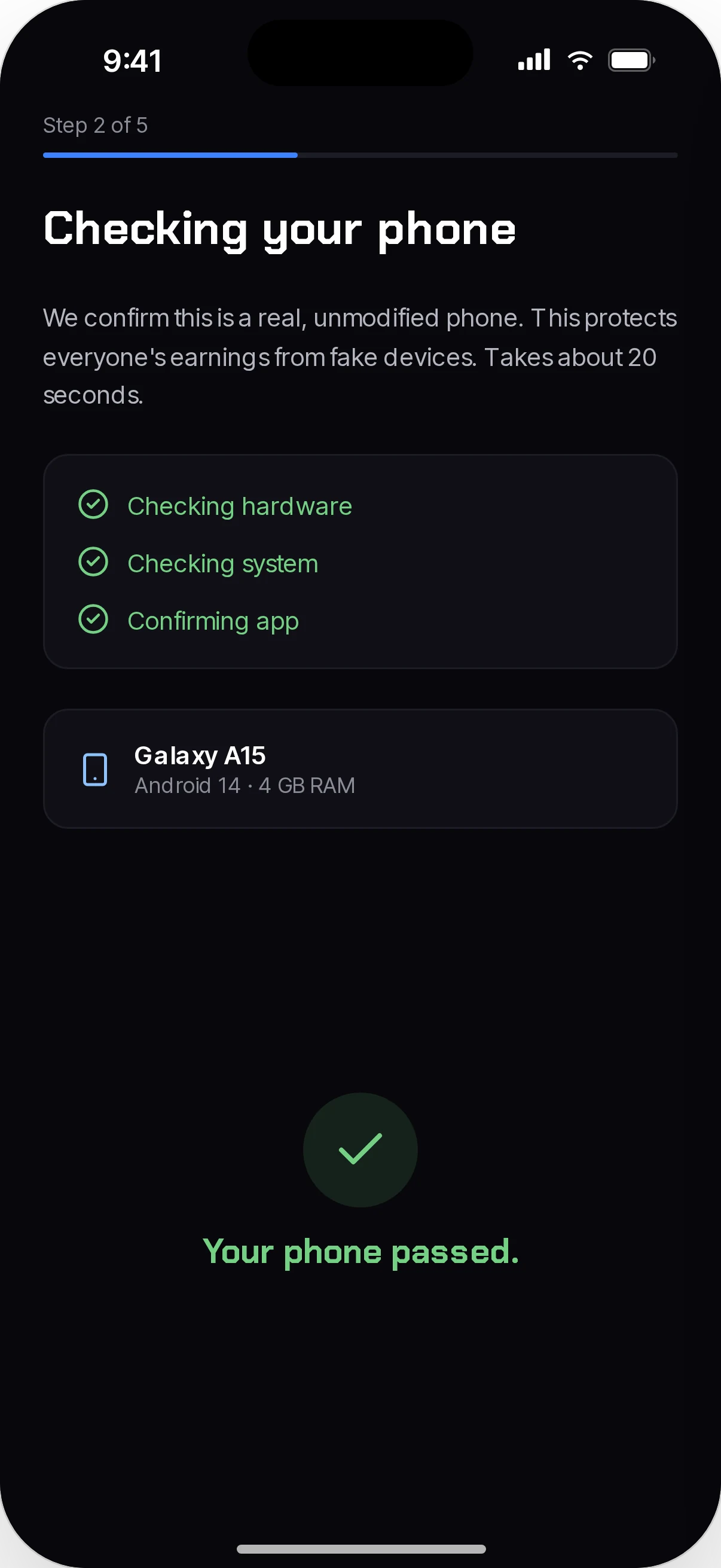
Hardware-backed attestation confirms a real, unmodified phone running the genuine app. Rooted devices, emulators and cloned installs fail here. This single step is what lets Brydg make capacity claims to buyers and pass diligence from telcos who will not contract with an anonymous pool. A short benchmark then places the phone in a capability tier, so a $60 Android and a flagship are paid the same rate for the same standard compute-unit and each is sent only the jobs it will finish. Identity is tiered: a phone number for the base tier, an ID document and a selfie reviewed by a person for operators, an enhanced review only when Brydg asks. Every unit of work runs on at least two devices and is compared against known answers; a rejected unit is not paid, and the provider sees that check on screen.
In the demo: the benchmark result, the identity tiers, and a night's jobs marked paid, pending or rejected.
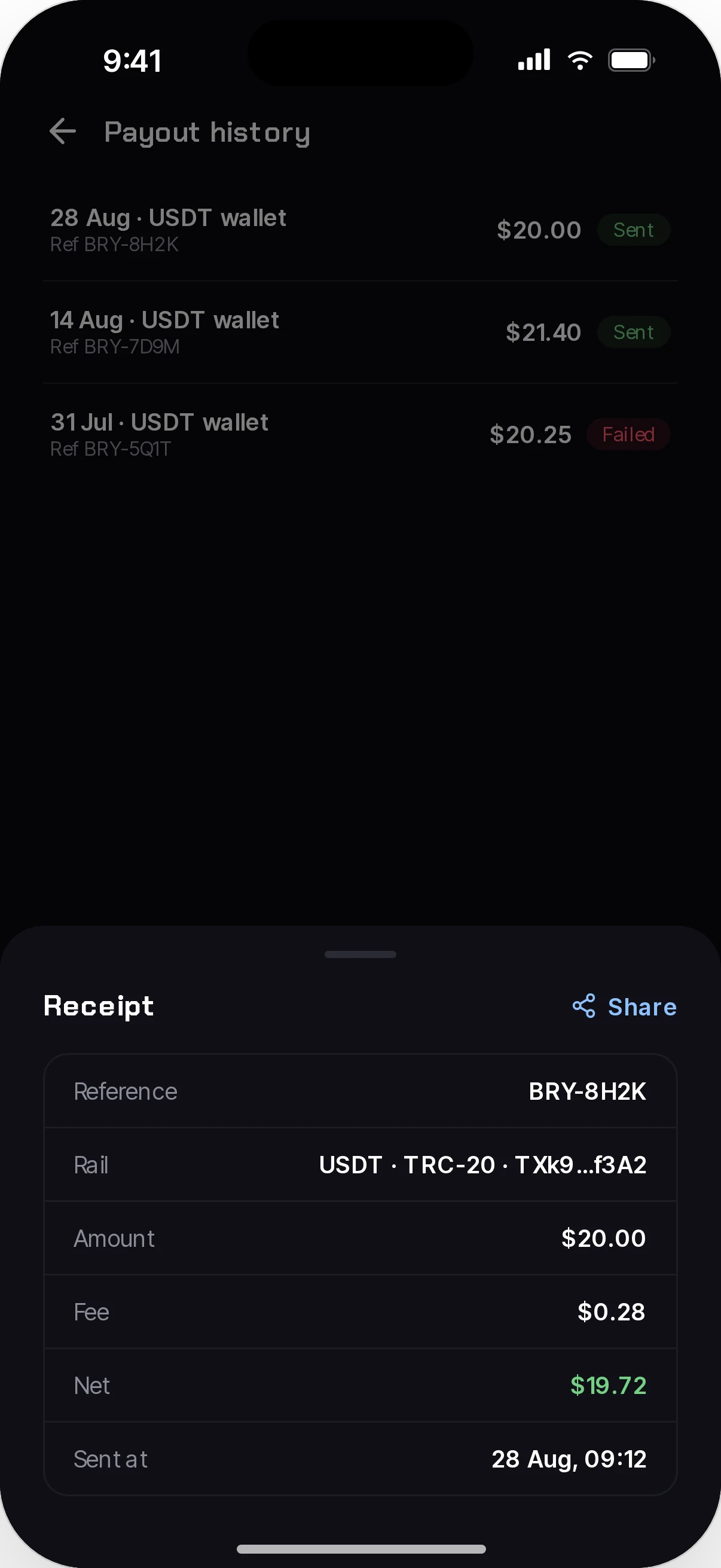
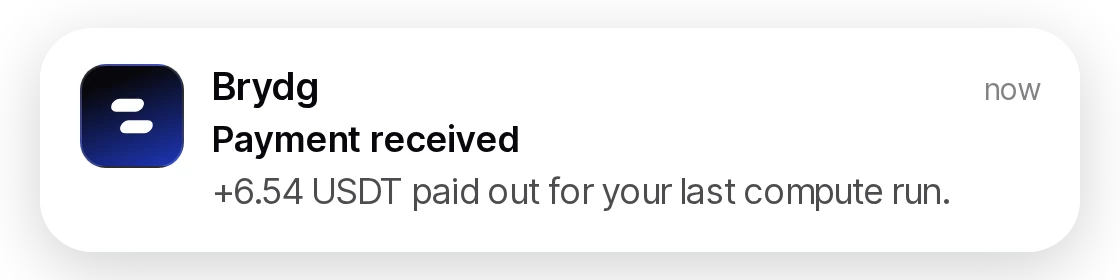
Sending stablecoin to millions of wallets every month would cost more in fees than many providers earn, so the ledger settles in stablecoin and each provider chooses a local last mile: mobile money to the same phone number, airtime or a data bundle where that is worth more than cash, stablecoin to a wallet for operators and larger balances. Balances accrue and pay out at a low threshold or on a schedule, in batched transactions, with fees capped; if a rail would cost more than the cap, Brydg pays the difference or waits for a cheaper moment. Every payout carries a reference, rail, amount, fee and net. Provider payouts are a hard cost from day one, by design: paying suppliers in stablecoin rather than tokens forces the network to have real execution revenue, keeps supply from inflating, and keeps providers out of the holder pool entirely.
In the demo: choosing a rail, the wallet test send, and the payout history.
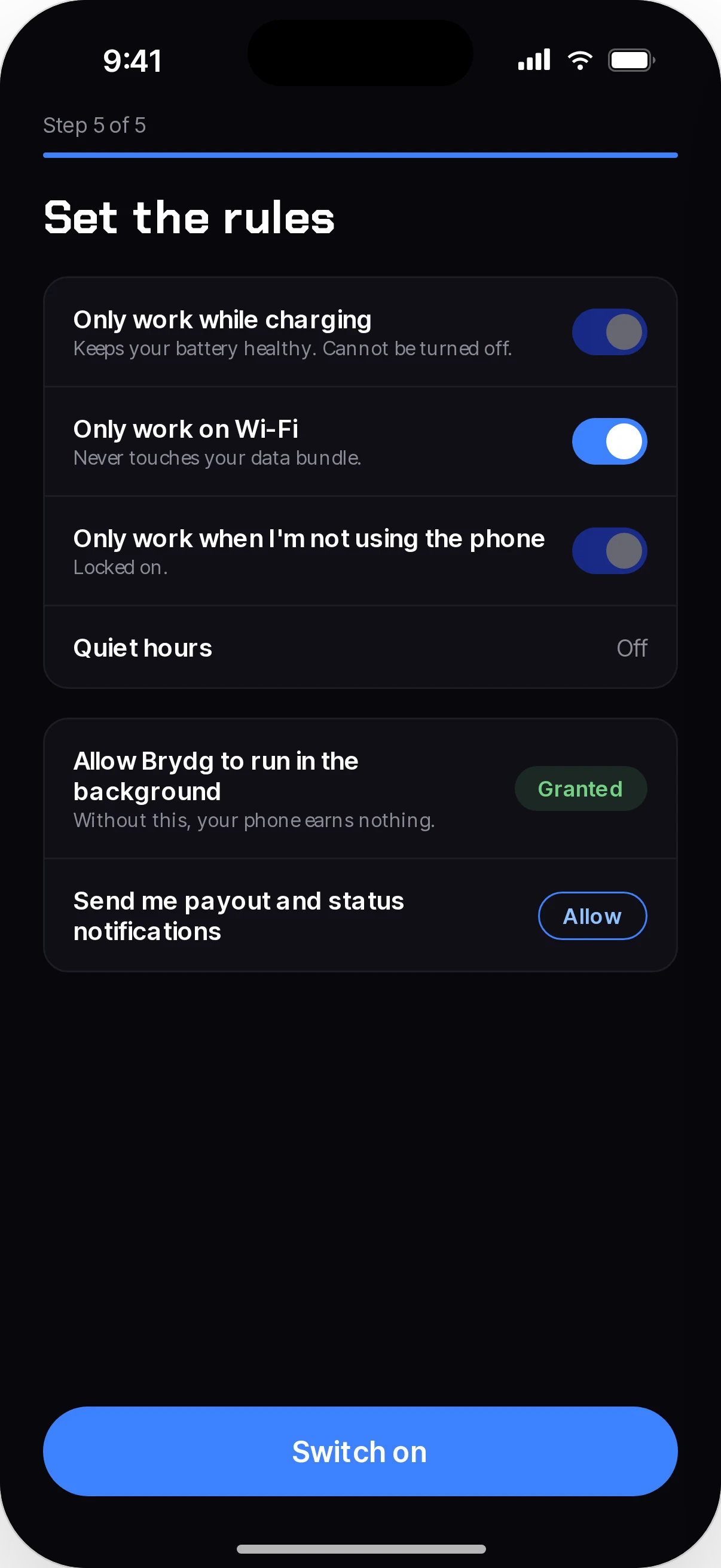
Only while charging, and it cannot be turned off, so battery health is never the provider's problem. Only on Wi-Fi, so the data bundle is never touched. Only when idle, so the phone is never slower. These locks are why the app can promise no effect on battery, data or day, and why retention does not depend on attention. Behind them sit the mechanisms that keep a phone on the network: reputation tiers that move a device earlier in the queue and into better-paid jobs as nights of availability accumulate, a morning summary and a payout-sent notice that are the two messages comparable networks never delivered, an operator class that runs many phones from one account and does not churn, and a plain-words page on what runs on the phone, because retention in these markets is won by trust, not by amounts. Amounts on one phone are modest and are shown as modest; the documents say so and so does the screen.
In the demo: the home screen and widget, reputation tiers, notifications, the operator fleet, and what runs on my phone.
The app ships publicly in June 2027, Africa first, on a first corridor with a contracted buyer, a live payout rail and the verification stack in place, so that no phone is recruited into a network with nothing to pay it. Launch, the token generation event, follows one month later. If the app is late, TGE moves with it: one month after the public release, never before. Any revision is published as a new Terms of Sale version and every holder is notified.
App designed; live demo available; pre-sale open at Stage 1.
Agent-recruited devices in the first corridor. Benchmark suite and rate card finalised. Payout rail integrated. First buyer contract opens Stage 2.
First corridor opens; first verified devices online and earning.
Tokens delivered in full. First accrual period opens on a network already paying providers.
Further corridors against contracted demand. Telco-bundled cohorts with the app pre-installed.
Status, 2 September 2026: design complete; demo live; production build not started; no device enrolled; no provider paid. Every figure on this page is made up.